

 Imprimir / Print
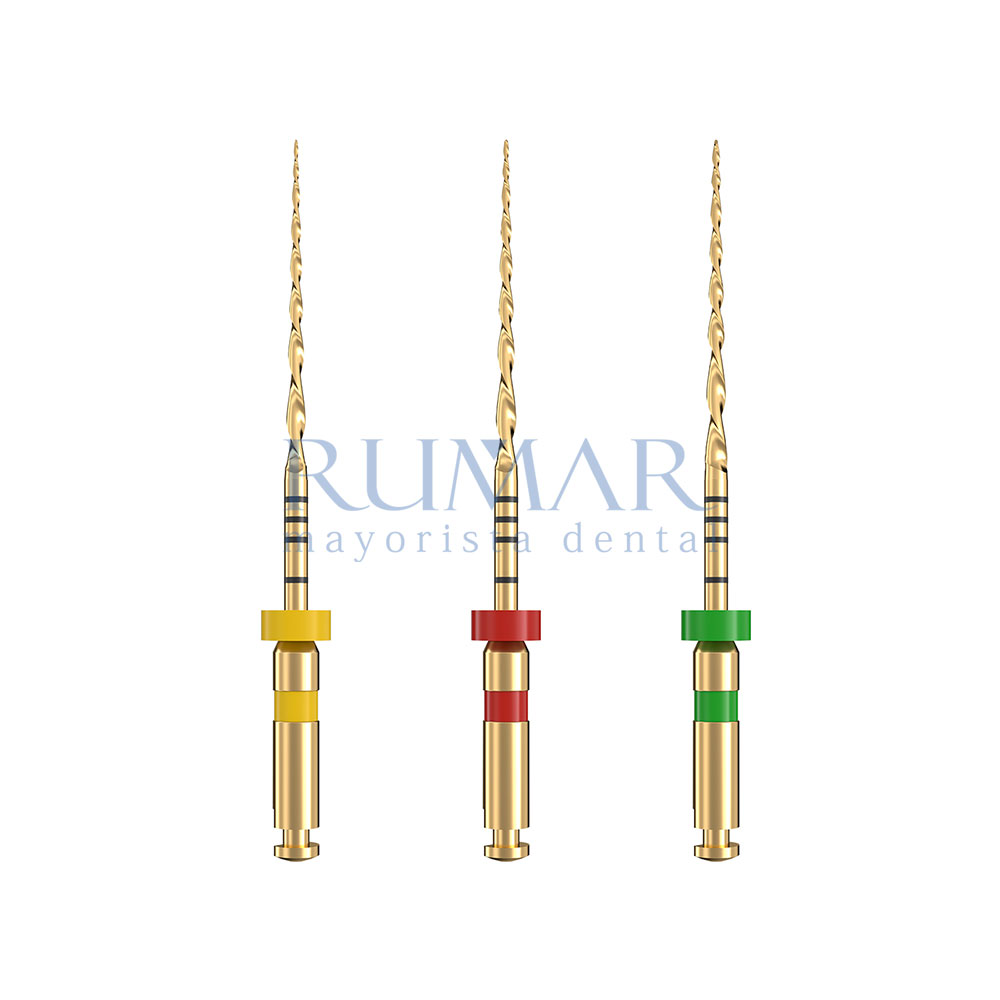
 Set of files for root canal treatment InnoReci reciprocating movement
“The efficiency of reciprocating motion”
Simplified workflow: InnoReci simplifies root canal preparation by eliminating the need for an initial slip path, reducing procedural errors compared to traditional rotary systems.
Reciprocating motion: InnoReci is designed to operate with a 150° CCW / 30° CW left-cut reciprocating motion, alternating clockwise and counterclockwise to reduce stress on the file and decrease the risk of cyclic fatigue, a common cause of file fracture.
NICKEL and TITANIUM alloy: The “golden controlled memory” heat-treated NiTi alloy used in InnoReci improves the flexibility of the file, allowing it to adapt more effectively to the natural anatomy of the canal. This increased flexibility improves the centering ability of the file, ultimately helping to reduce conduit conveyance.
Inactive guide tip: A rounded, inactive tip designed for reciprocating motion allows the file to glide smoothly through curved ducts, ensuring safe and gradual navigation.
“S”-shaped cross-section: The specific design of the file, which features an S-shaped cross-section, improves cutting efficiency and ensures smooth progression within the canal. This minimizes the stress on the dentin and allows for effective debris removal.
Features:
- KP-2007-25
- Diameter: 0.20 mm
- Taper (%): 07
- Cross section: S-shaped
- Colour of the stem:Yellow
- Ring Color: Yellow
- Recommended speed: 350 rpm
- Recommended torque: 2.0 N•cm
- KP-2508-25
- Diameter: 0.25 mm
- Taper (%): 08
- Cross section: S-shaped
- Stem Color: Red
- Ring Color: Red
- Recommended speed: 350 rpm
- Recommended torque: 2.0 N•cm
- KP-3506-25
- Diameter: 0.35 mm
- Taper (%): 06
- Cross section: S-shaped
- Colour of the stem: Green
- Ring Color: Green
- Recommended speed: 350 rpm
- Recommended torque: 2.0 N•cm
Procedure:
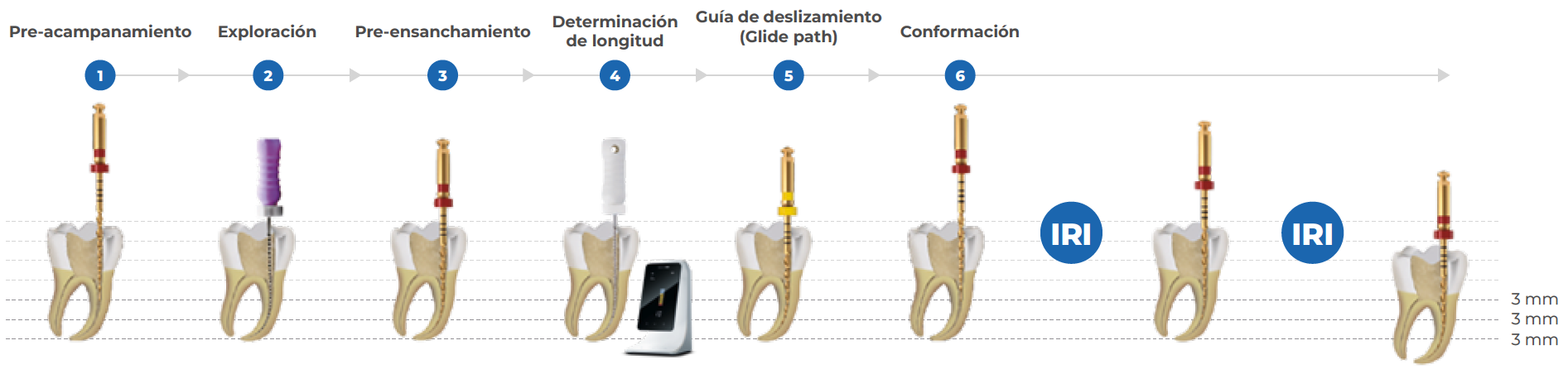
- Use the file KP-2508-25 (28-DMIR250825) using a brushing motion to remove any coronal interference.
- Use files by hand small ones (ISO 10 or 15) to explore the canal until reaching the working length of the provisional filling, ensuring that the file can move freely.
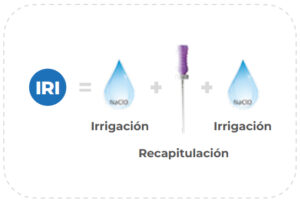
- Transfer the length of the working piece to the file KP-2508-25 (28-DMIR250825) . Use a motion of light tapping, limiting the movements to less than 3 mm with a light pressure towards the tip. After three taps, clean the grooves of the instrument and irrigate the canal.
- Determine the working length of the instrument using a apical locator for apices (e.g. Ai-Pex, DPEX X, Woodpex V) and continue with the KP-2508-25 (28- DMIR250825) up to the full length of the piece.
- If the file KP-2508-25 (28-DMIR250825) does not move forward, use the file for track (glider) KP-2007-25 (28-DMIR200725) for one or more passes, then try again with the file KP-2508-25 (28-DMIR250825).
- Complete the widening with the KP-2508-25 (28-DMIR250825) (or larger, that is to say, KP-3506-25 (28-DMIR350625)). Check using a hand file (ISO 15), verifying the permeability.
- After the final set-up to the length of the workpiece is complete, check the fit of a cone of gutta-percha before proceeding with the final irrigation and disinfection.
 Folleto Limas Endo InnoReci | ES